Polylithic Survival Hub
Food, rest, keys, and the map that is trying to eat you.
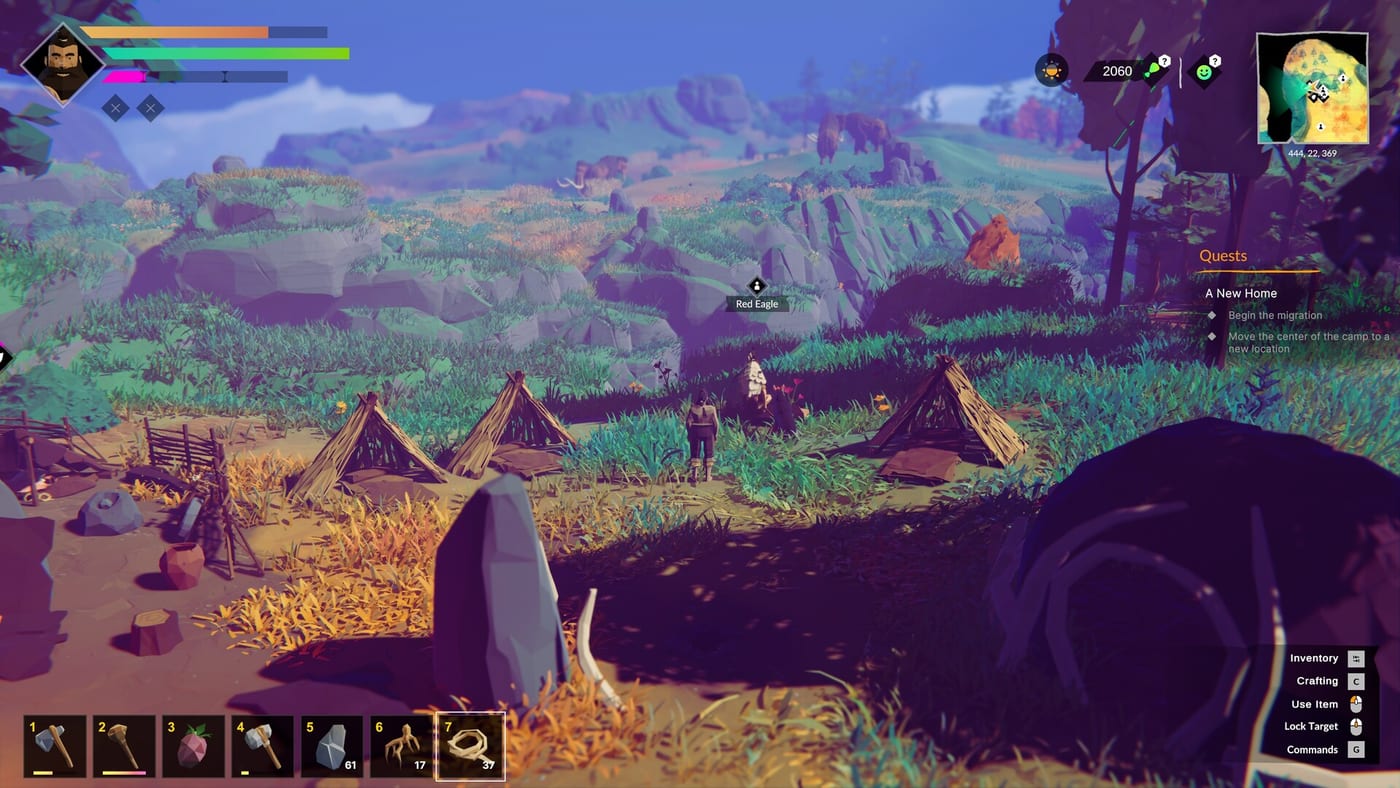
Survival in Polylithic is a full-time job with a colorful low-poly smile. The store page is honest about the joke: humans are not apex predators yet, the hills do not care, and the rapids will not move for your raft fantasy. This hub gathers the daily systems that keep a body working while the guides tell you what to do next.
You are managing hunger, stamina, rest, and a body that gets fat or lean after 1.0. Food is not just a bar. Berries speed you up. Roots help stamina recover. Nuts raise the stamina ceiling. Roasted meat still wins when a fight is coming. The hunger and body page is the metabolism desk. The cooking page is where buffs and the generated minigame live. Shouts, clubs, and the Mammoth boss sit on combat.
The loop that does not get you killed
A safe loop is gather close, cook at a fire you already own, sleep in a hut, then take one risk. The risk can be a caribou pair, a clay run along a river, or a scout toward snow. It should not be “walk until the map is interesting.” Plains look empty until a bison pack agroes as a group. Forests sound friendly until a bear is already behind you. Read biomes and the map before you treat every green patch as a grocery aisle.
Saving is part of survival, not a menu courtesy. Launch-week players report an autosave around every ten minutes. A lot can happen in ten minutes: a stuck storage prompt, a quest that fails to tick, a crash after a hunt. Place a bed or sleeping bag inside a hut and use it on purpose. The controls page lists the keys, the hold-to-gather complaint, and how Alt cycles nearby items when the world is cluttered.
Companions are not free insurance
1.0 lets you tame a dog or a hyena. Both eat, heal, and take commands. Both will also path like they owe the terrain money. A companion that circles a rock is not tanking a saber-tooth. Treat tames as scouts and extra inventory, then read taming before you starve the camp to feed a hyena that is stuck in a river.
Human followers sit in the tribe hub, but they leak into survival because they eat your food and steal your happiness when they get flattened. If you are still solo, stay solo until the first hut and a reliable roast loop exist. The hunting guide explains which animals are food and which animals are a wipe.
Tools that keep the loop honest
When the evening gets messy, stop improvising. Tick the survival checklist. Mark missing stalk and hide on the gathering planner. Then come back to this hub only for the system you actually failed: keys, food, tames, or terrain.
Polylithic is prettier than most survival tutorials admit. That beauty is how it sells a second death. Eat, sleep, save, then take the risk you chose. The plains will still be there after a nap.
Frequently Asked Questions
Quick answers to the most common questions.
What is the first survival skill in Polylithic?
Learn the controls, then lock a fire and a bed. Movement without a save point is just a scenic way to lose a hunt.
Is cooking required or can I live on berries?
You can nibble berries, but roasted meat and cooked fish carry fights. See cooking for buffs and the campfire versus stone stove split.
Should I tame a dog on day one?
Not before the camp can feed people. Taming is useful, but companions share the same food pile you need for recruits.
Which biome is safest for food?
Forest edges for roots, nuts, and small game. Plains feed you if you pick caribou and refuse bison. Details live on the biomes page.