Taming in Polylithic
A loyal dog, an alarming hyena, and a pathing algorithm with opinions.
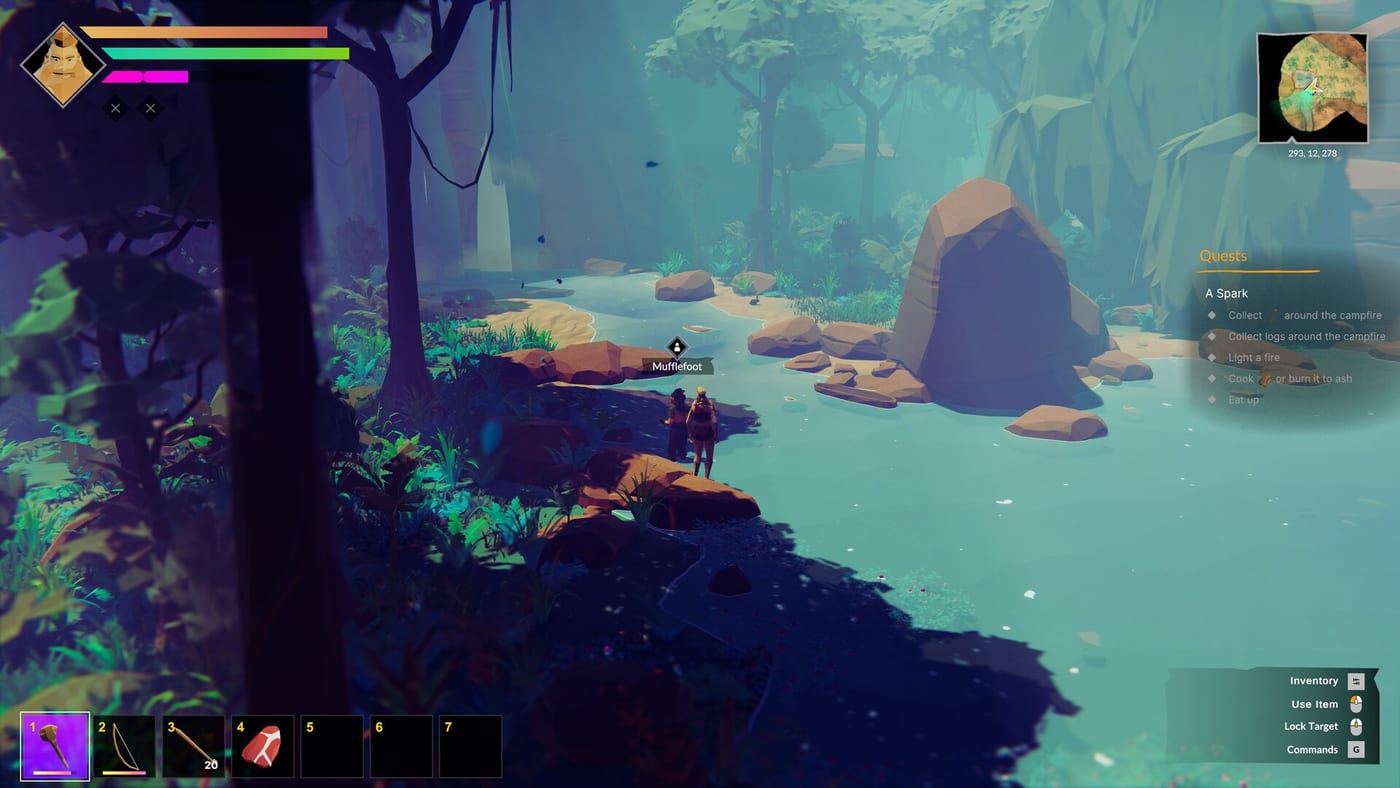
The 1.0 pitch includes a sentence that sold a lot of wishlists: you can tame a dog or a hyena. Both are loyal. One is slightly more alarming. Both eat, heal, follow commands, and will judge your decisions. This page is how to use that sentence without starving the village or watching your new friend orbit a boulder until a bear arrives.
Taming is not the first-hour project. Secure flint, fire, and a bed with getting started first. A companion on an empty stomach is just wildlife you invited indoors.
What you can actually tame
Official 1.0 text names dogs and hyenas. Patch notes added three tamable hyenas, better wolf-and-hyena swimming, and a wolf companion that can swim while following. Wild wolves you hunt are still hunts. If a prompt appears on a creature, believe the prompt. If no prompt appears, it is food or a wipe. Do not stand in a bison and hope friendship happens.
Dogs are the readable choice. They read as camp. Hyenas read as a joke the art team won. Functionally, treat both as extra inventory, a scout, and a creature that will path worse than you. They are not a substitute for a bow or for how to hunt discipline.
Feeding and commands
Companions share the food economy. Cook surplus before you recruit a mouth with fur. If the camp is already stretching roasts across villagers, delay the tame. Cooking is the real taming prereq.
Commands exist and 1.0 named them: Hunt, Idle, Follow, Heel, plus combat assist. You can keep two assistants and a companion that does not count toward that cap. Assistants and pets now attack what you attack. Pet the dog. Animals can eat and heal. 1.0.0.25 reduced their idle noise. Use commands on open ground, not in a hut doorway, not in a river. If your dog is writing circles, park Heel, walk away, and call again from a flatter tile. If the hyena is in water, you now own a swimming lesson. Bring controls patience and the unstuck energy you already spend on villagers.
Combat and the fantasy of a tank
A tame can distract. A tame can also pull a second animal you did not want. Do not send a dog into bison. Do not assume a hyena understands your kite plan. Start the fight yourself with range, keep the companion off to the side, and be ready to disengage if pathing turns the pull into a reunion.
Tribe members have the same problem on follow. A dog plus a follower plus you is three pathing experiments. For serious hunts, leave the village at home and take the bow. For chores, take the dog and let it vacuum the obvious.
When taming is a story object
Some players reported missing dogs after a quest or a knockout. If a tame vanishes, check the map for a marker, wait a day-night cycle, and relog. If the animal is gone, it is gone. Do not burn an evening on a ghost collar. The story guide collects similar “the world forgot my progress” stalls.
Taming is one of the charms that makes Polylithic feel like a camp instead of a spreadsheet. Keep it charming. Feed the thing, call it on flat ground, and never let it decide your bison policy.
Frequently Asked Questions
Quick answers to the most common questions.
What animals can you tame in Polylithic 1.0?
Dogs and hyenas, including three hyena tames called out in patch notes. Wild wolves and megafauna are hunts, not pets.
Should I tame something on day one?
No. Build a fire, a bed, and a food surplus first. See getting started.
Why is my dog running in circles?
Pathing is janky in launch week. Reissue commands on flat ground and keep tames out of rivers.
Can a hyena tank a bear?
Do not plan on it. Use how to hunt and treat tames as helpers, not bosses.